
Update (July 21): AARO posted its FY2025 Consolidated Annual Report on UAP – closing one of the two long-standing statutory gaps flagged below. Historical Record Report Volume II remains outstanding. This week’s roundup →
The All-domain Anomaly Resolution Office – AARO – is the Pentagon’s official UFO investigation unit. Created by Congress in 2022, it was supposed to bring transparency and rigor to a topic the government had dodged for decades.
Three years in, the office has failed to deliver on key promises. Congressional mandates have gone unfulfilled. Critical evidence has gone missing. And the people who pushed hardest for AARO’s creation are now among its loudest critics.
The Missing Reports
Congress required AARO to produce specific deliverables. As of early 2026, two major ones remain outstanding:
1. Historical Record Report, Volume II
AARO published Volume I in February 2024 – a review of U.S. government involvement with UAP dating back to 1945. It concluded there was no evidence of extraterrestrial technology. Volume II, mandated by Section 6802 of the FY2023 National Defense Authorization Act, was supposed to follow. It hasn’t appeared.
2. The 2025 Annual Report
AARO is required to submit an annual consolidated report to Congress on UAP activity. The FY2024 report was published in late 2024. The 2025 report has not been released.
Christopher Mellon, former Deputy Assistant Secretary of Defense for Intelligence and now Chairman of the Board of the UAP Disclosure Fund, put it bluntly:
“AARO has yet to fulfill its statutory obligations. It has released neither the second volume of a congressionally mandated report on government involvement with UAP nor the required 2025 annual report.”
The Data Problem
Beyond the missing reports, there’s a deeper issue: AARO may not be getting the data it needs.
Satellite Imagery That Vanished
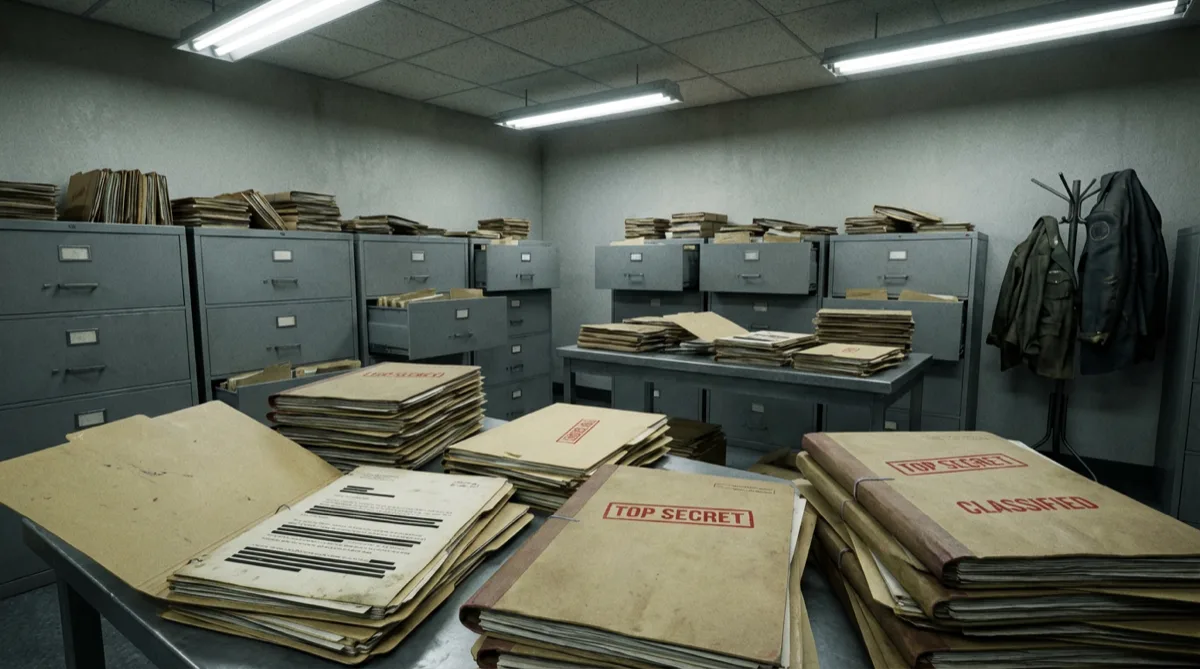
Mellon told Congress about a specific case: satellite imagery of a fast-moving UAP had been reviewed by government officials years ago. When Senate Armed Services and Intelligence Committee staff requested the report from AARO – then led by Dr. Sean Kirkpatrick – AARO claimed to have no record of any UAP satellite imagery.
Either the imagery was never shared with AARO, or it was lost. Neither answer is acceptable for an office tasked with centralizing UAP data.
NORAD’s Missing Reports
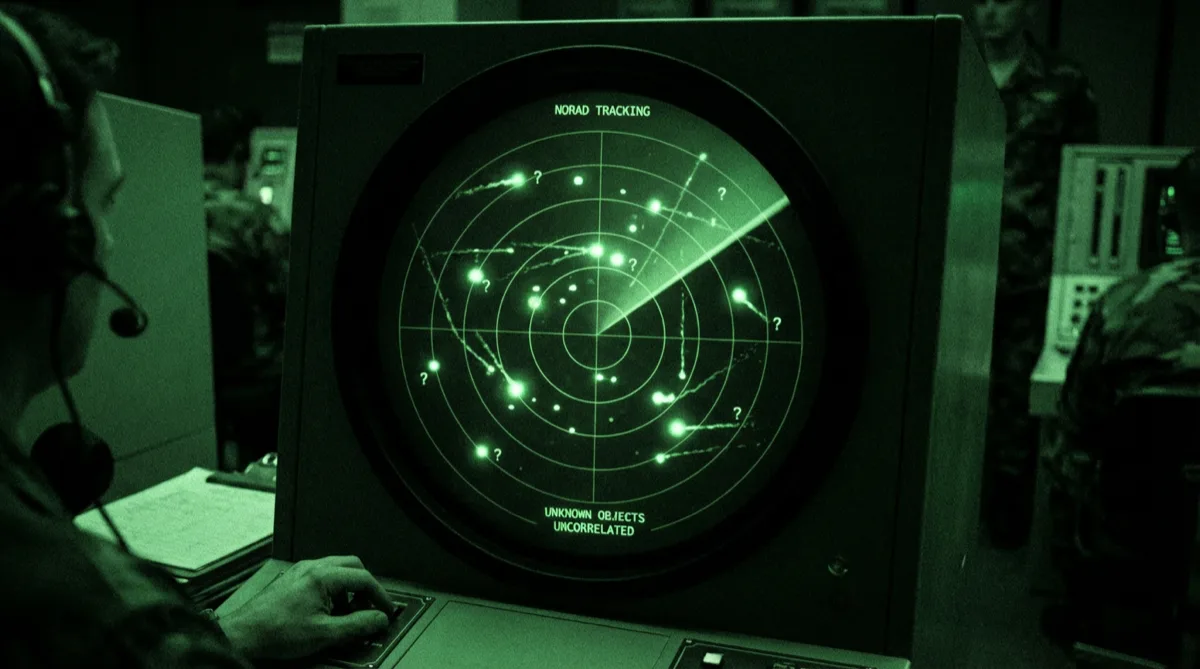
NORAD tracks thousands of “uncorrelated tracks” annually – radar contacts that don’t match any known aircraft. Fighters are sometimes scrambled to investigate. Yet these incidents do not appear to be reported to AARO.
Mellon described a “near-total absence of UAP reporting from the massive radar and space surveillance systems operated by the U.S. military and Intelligence Community.” Over 1,200 tactical UAP reports have been submitted to AARO since 2022 – but the big surveillance systems aren’t feeding in.
Agency Non-Cooperation
The Air Force and CIA are not fully cooperating with AARO’s data collection, according to Mellon’s congressional testimony. Information remains siloed in separate agencies, and AARO lacks the authority – or the will – to compel access.
The Leadership Turnover
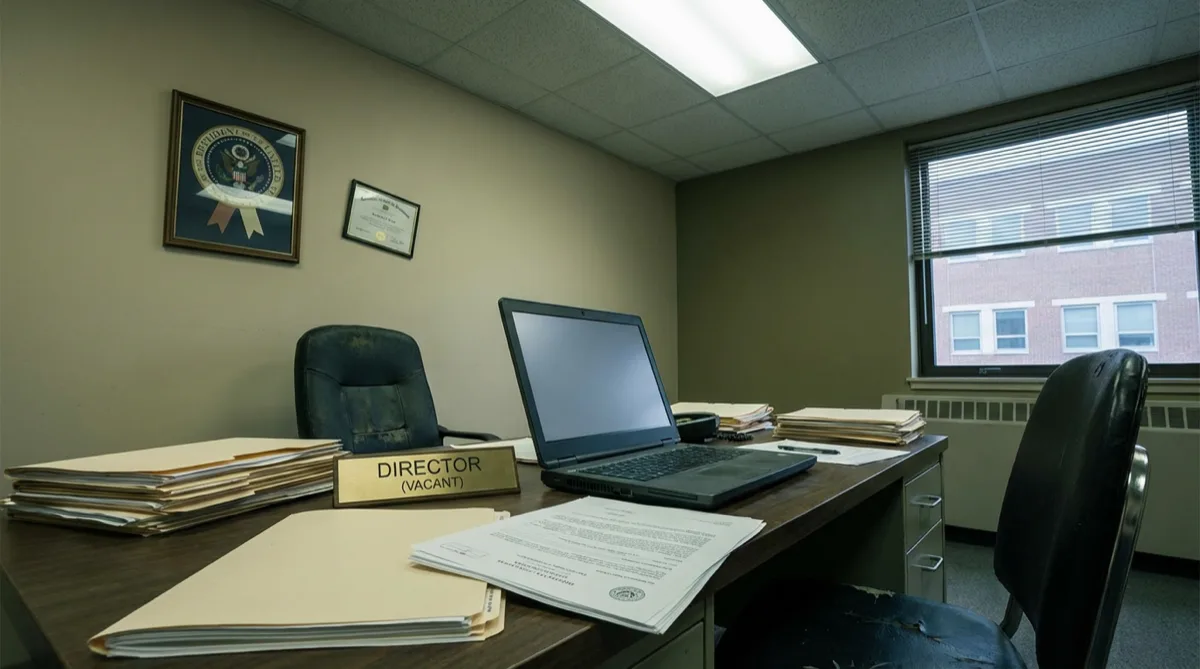
AARO has already burned through its founding leadership:
| Period | Director | Notes |
|---|---|---|
| July 2022 – Dec 2023 | Dr. Sean Kirkpatrick | First director; retired after 18 months |
| Dec 2023 – Aug 2024 | Tim Phillips (acting) | Deputy director; interim leadership |
| Aug 2024 – present | Dr. Jon Kosloski | Former NSA researcher; current director |
Kirkpatrick’s departure after just 18 months raised questions. He later published op-eds criticizing the political dynamics around UAP disclosure, suggesting the issue had become more about politics than science.
Kosloski, a physicist with 20+ years at NSA, has set three priorities: partnerships, transparency, and scaling up. In November 2024, he testified before the Senate Armed Services Committee:
“AARO has discovered no verifiable evidence of extraterrestrial beings, activity, or technology.”
He reported that AARO holds over 1,600 UAP reports, with 757 of sufficient quality for analysis. Most resolved cases are birds, balloons, drones, or other conventional objects.
The Volume I Problem
Even the report AARO did deliver has drawn criticism. The Historical Record Report Vol. I concluded – across 63 pages – that the U.S. government has found no evidence of extraterrestrial technology or alien contact.
The UAP Caucus and multiple members of Congress have challenged the report, citing:
- Contradictions with testimony from credible witnesses like David Grusch
- Dismissal of compelling witness accounts without adequate investigation
- Inconsistencies between the report’s conclusions and evidence presented in congressional hearings
- Lack of access to programs and data that witnesses have described under oath
The Whistleblower Gap
Congress has passed protections for UAP whistleblowers, but concerns remain. A September 2025 House hearing found that the federal government has “failed to provide adequate information to Americans” on UAP programs. Witnesses testified that “withholding information undermines Americans’ confidence in the federal government.”
The hearing emphasized the need to protect whistleblowers from retribution and to address how UAP-related information is classified.
What Needs to Happen
Mellon has outlined specific recommendations:
- Compel full cooperation from Air Force, CIA, and NORAD with AARO’s data collection
- Deliver the missing reports – Volume II and the 2025 annual report
- Audit AARO’s data pipeline to ensure all relevant UAP incidents are being captured
- Strengthen AARO’s authority to access classified programs described by whistleblowers
- Establish consequences for agencies that fail to share UAP-related information
As Mellon wrote: “The public’s trust has been eroded and must be restored. Fulfilling reporting obligations is a good step in that direction.”
Whether Trump’s recent directive to release UFO files will accelerate this process or simply add another layer of political noise remains to be seen. The structural problems at AARO – data silos, agency resistance, unfulfilled mandates – won’t be solved by a social media post.
Sources: DefenseScoop · Mellon Substack · House Oversight Committee · The Debrief · USA Today · UAP Caucus
