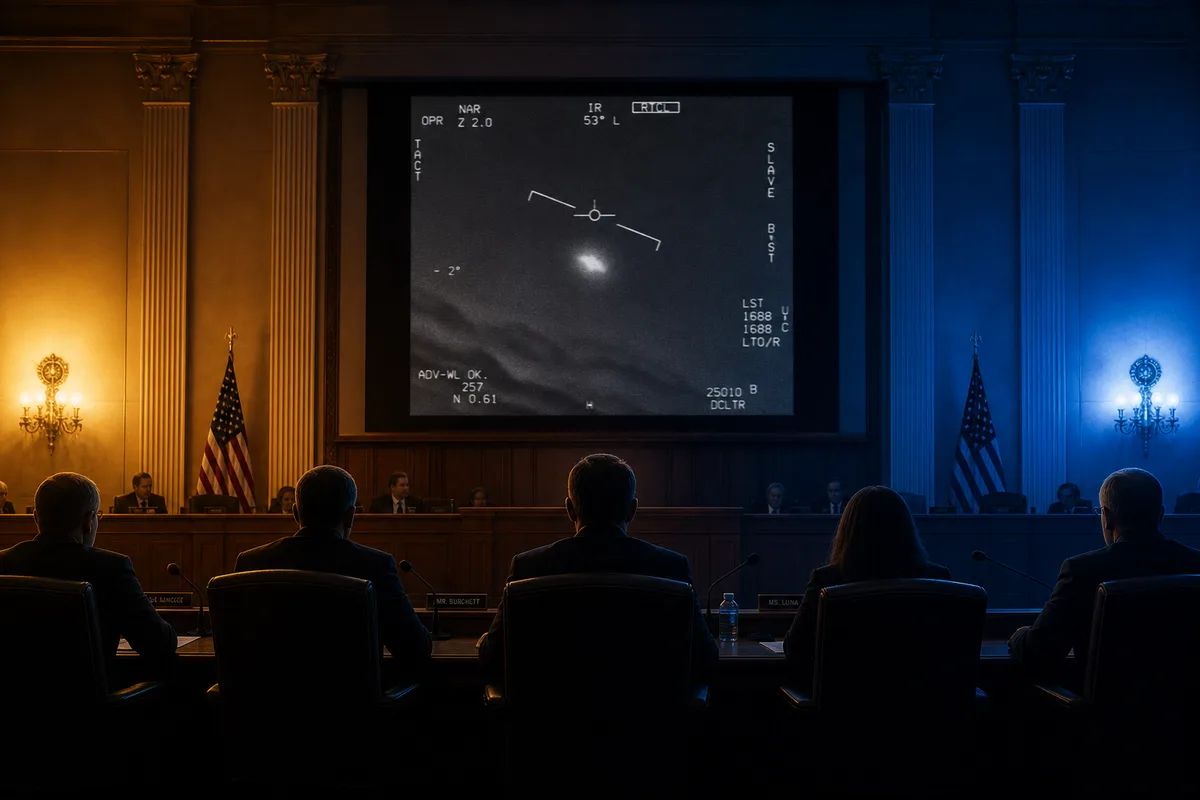
When the PURSUE portal went live on May 8, Washington reacted the way Washington usually reacts to something genuinely unprecedented: in every direction at once.
Within hours, members of Congress who had been aligned on demanding UAP transparency scattered into at least four distinct camps. The public got its first look at the political fissures that will shape what comes next – including whether the 46 classified videos expected next week actually arrive, and how aggressively Congress pressures the intelligence community for the strongest material.
The Pushers: More, Faster, Now
Rep. Anna Paulina Luna, Rep. Tim Burchett, and Rep. Eric Burlison came out of the release demanding more – immediately and forcefully.
Luna confirmed the first batch was not the end:
“The UFO files that were released were classified – there’s more to come.”
She said she had spoken with the Pentagon the night before and that the 46 classified UAP videos she demanded in March were still in the pipeline. By Sunday, NewsNation reported the videos would arrive next week.
Burchett called the first release “just a drop in the bucket” and said the “holy crap” part was still on the way. He’d told Just the News before the drop that he expected the first batch to include “some stuff” from pilots and “maybe one video” – and that the real material would come in waves.
Burlison went further than anyone. He warned the administration that if certain videos are not declassified, he will use the Speech or Debate Clause of the Constitution – which protects lawmakers from prosecution for statements made in legislative proceedings – to release them himself. He specifically named footage of “UAPs flying around Russian submarines.”
That’s an extraordinary threat. The Speech or Debate Clause has been invoked before to enter classified material into the congressional record (most famously by Senator Mike Gravel with the Pentagon Papers). Burlison is signaling that he considers the withholding of UAP videos a legitimate constitutional crisis, not a bureaucratic delay.
The Interpreters: Scripture and Fallen Angels
Rep. Lauren Boebert watched the same release and saw something entirely different.
She said the answers “may already be in the Old Testament,” pointing to fallen angels and the Nephilim – the biblical race described in Genesis as the offspring of divine beings and human women. She described the phenomenon as “more spiritual, and if you really want to go there, demonic.”
Boebert’s framing was not an outlier. Vice President JD Vance has previously referenced “demons” in conversations about UAP. Rep. Luna has cited the Book of Enoch. And a separate reporting thread has emerged about pastors being briefed to prepare their congregations for disclosure – complete with references to Nephilim, government black-site briefings, and spiritual warfare.
The religious interpretation is not marginal. It has congressional champions, a vice-presidential voice, and a rapidly growing audience. Whether it represents genuine belief or strategic framing is an open question – but it is now part of the institutional response to disclosure.
The Dismisser: Propaganda
Rep. Marjorie Taylor Greene broke from the pack entirely. She called the PURSUE release “shiny object propaganda” – suggesting the administration was using UFO files as a distraction from other political priorities.
Greene has historically been dismissive of the UAP topic. Her reaction matters less for its content than for what it signals: even inside the Republican majority that controls the House, there is no consensus that UAP disclosure is a legitimate priority. If Greene’s view gains traction, it could undercut committee momentum for compelling the intelligence community to release stronger material.
The Bipartisan Demand: This Isn’t Enough
The most consequential reaction may have come from the members who said the release was underwhelming – not because they don’t believe, but because they’ve seen more.
Rep. Gerry Connolly had previously sponsored the Schumer-Rounds UAP Disclosure Act and pressed for stronger congressional oversight. Sen. Chuck Schumer himself indicated bipartisan agreement for transparency, though specifics of his post-PURSUE statement are still emerging.
Most striking was Rep. Suhas Subramanyam, who said:
“I’m underwhelmed by the release given the things that I’ve seen.”
That’s a sitting member of Congress saying, on the record, that classified material he has personally reviewed is substantially more significant than what the government just released to the public. It’s an implicit confirmation that the PURSUE portal, as of its first tranche, is showing the public a filtered picture.
The Insiders: Paradigm Shift and Obstruction
Two figures who have been central to the disclosure story for years reacted on opposite emotional frequencies.

Luis Elizondo called the release “a paradigm shift for humanity” – the former AATIP director framing the moment as the culmination of a fight he has been waging since 2017.

David Grusch struck a darker note. Hours after the release, he said the CIA and DIA are actively blocking the President’s team from accessing files. By Sunday, Liberation Times named Aaron Lukas, the Principal Deputy DNI, as a key figure in the resistance.
That gap – Elizondo’s optimism and Grusch’s warning – captures the central tension. The system has started releasing files. The question is whether the system will also release the files that matter most, or whether internal resistance will ensure the strongest material never reaches the portal.
What the Split Means
The four-way fracture matters because the next tranche depends on congressional pressure.
If the pushers sustain momentum, the 46 videos arrive next week and Congress escalates demands for national-level collection data. If the dismisser camp grows, political cover evaporates for officials like Gabbard who are pushing transparency from within. If the religious interpreters dominate the public narrative, the conversation shifts from evidence to theology. And if the bipartisan “this isn’t enough” caucus holds, it becomes much harder for the intelligence community to release tactical footage and claim the job is done.
Right now, all four reactions are live. The next week – when the 46 videos are expected and the CIA resistance story circulates through Washington – will determine which camp sets the pace.
Sources: PURSUE article · Luna 46-video demand · Burlison article · Pastors briefed article · Aaron Lukas article · Grusch article · This week’s roundup
