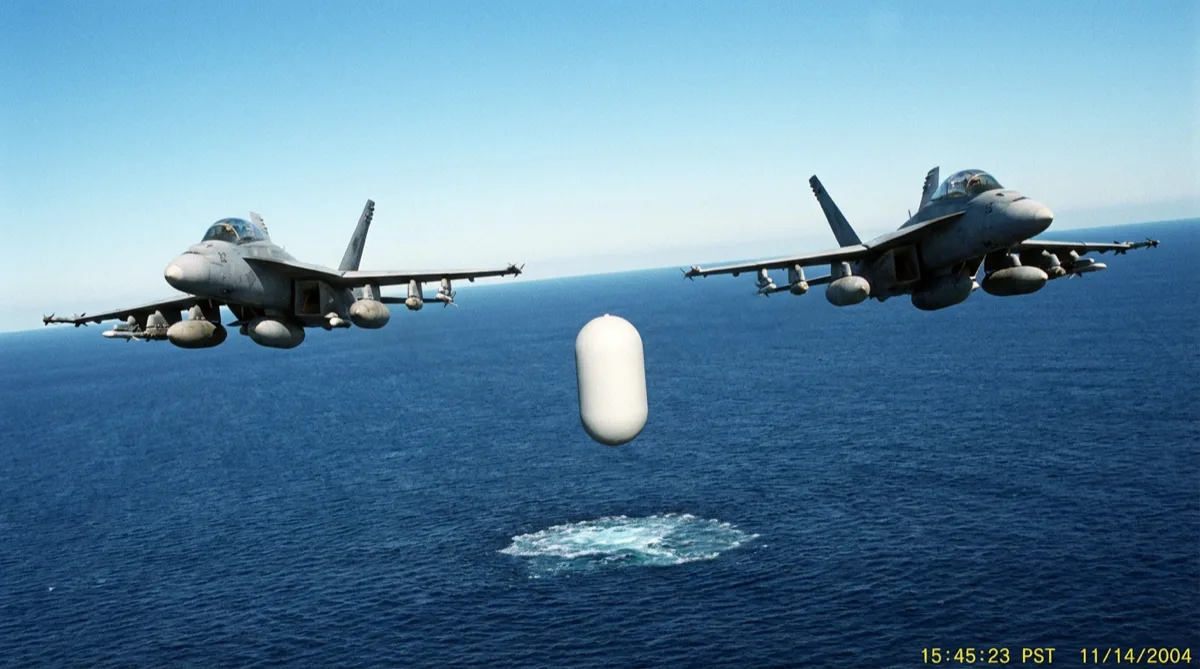
On the afternoon of November 14, 2004, two F/A-18F Super Hornets from the aircraft carrier USS Nimitz were redirected from a routine training exercise off the coast of Southern California. The guided-missile cruiser USS Princeton had been tracking anomalous radar returns for days. Now operators wanted eyes on the target.
What the pilots found – a smooth, white, wingless object the size of their own aircraft, hovering above a churning patch of ocean – would take more than a decade to reach the public. When it did, it became the single most discussed military UAP encounter in modern history.
A Week of Radar Anomalies
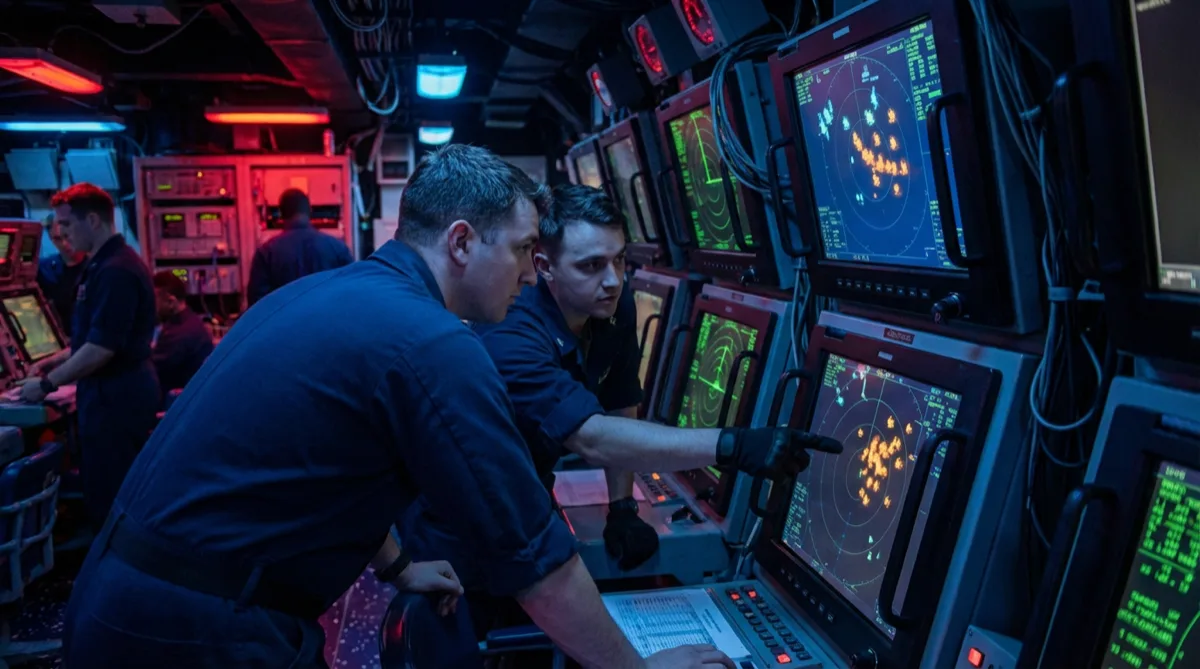
The encounters didn’t begin on November 14. Starting around November 10, 2004, radar operators aboard the USS Princeton noticed unusual tracks appearing on the ship’s AN/SPY-1B Aegis radar system. The objects seemed to appear at high altitude, descend rapidly, and hover or loiter in the SOCAL operating area – roughly 100 miles southwest of San Diego.
Kevin Day, an Operations Specialist on the Princeton, later described tracking these contacts over multiple days. The returns were verified against the ship’s radar to rule out clutter or malfunction. An E-2C Hawkeye airborne early warning aircraft also picked up contacts. The tracks persisted.
“No predictable movement, no predictable trajectory.” – Alex Dietrich, pilot, 60 Minutes
The Intercept
On November 14, Commander David Fravor and Lieutenant Commander Alex Dietrich were flying as a pair – callsigns FASTEAGLE 01 and 02 – when the Princeton vectored them to investigate. The weather was clear, winds light, seas calm.
Descending toward the coordinates, both crews spotted a disturbance on the ocean surface – a localized area of whitewater, as if something large were just beneath the surface. Above it, a small white object moved erratically.
Fravor described it as a smooth, white, elongated shape – like a Tic Tac mint – roughly 40 feet long, with no wings, no exhaust, no visible propulsion. It had no markings.
“We saw this little white Tic-Tac-looking object…” – David Fravor, 60 Minutes
Fravor spiraled down toward the object. As he descended, the object appeared to mirror his movements, rising to meet him. When he committed to a direct approach, the object accelerated and vanished.
“This Tic Tac Object had just traveled 60 miles… (less than a minute).” – David Fravor, House Oversight Committee statement, July 2023
The Princeton’s radar reacquired the object moments later – at the strike group’s pre-designated CAP (Combat Air Patrol) point, roughly 60 miles away. If accurate, this implies a transit speed far beyond any known aircraft.
The FLIR Video
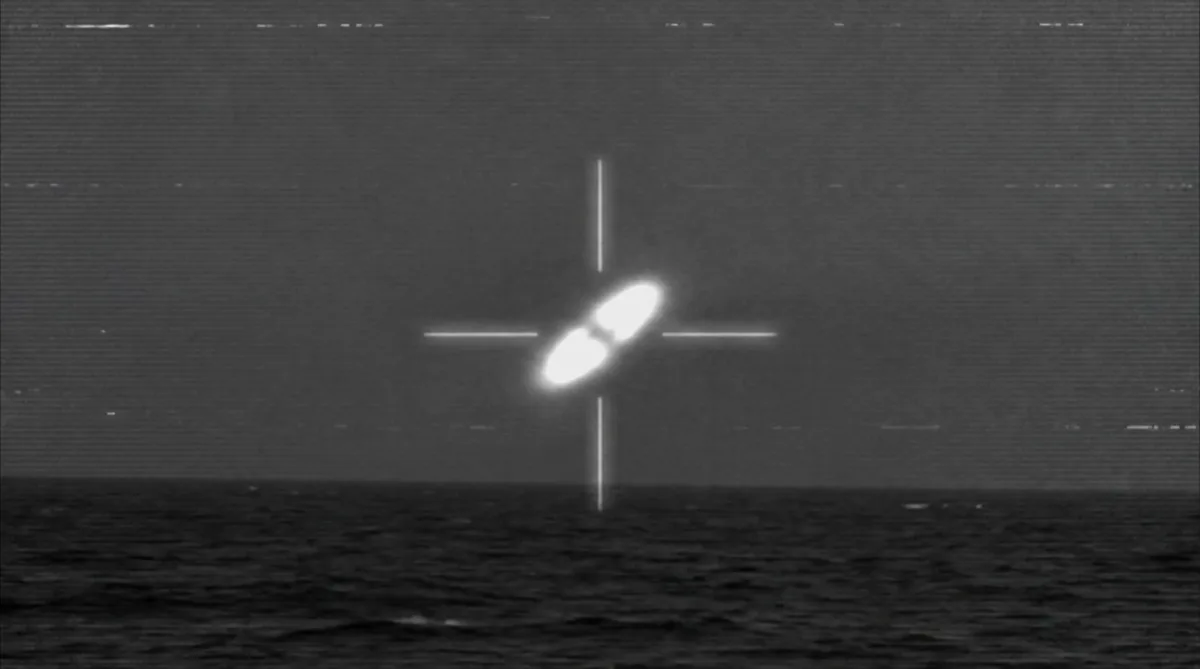
A second sortie launched shortly after. This time, Weapons Systems Officer Chad Underwood – the man who coined the term “Tic Tac” – recorded approximately 90 seconds of infrared footage using the jet’s ATFLIR targeting pod. The video, later designated FLIR1, shows a small oblong heat source being tracked against the sky. It does not capture the close-range visual encounter Fravor and Dietrich described.
“It was just behaving in ways that aren’t physically normal.” – Chad Underwood, New York Magazine, December 2019
The video’s chain of custody became its own controversy. Several personnel – including Princeton sailor Gary Voorhis and Nimitz technician Patrick “PJ” Hughes – later claimed that data recordings were collected by unidentified individuals shortly after the event. These claims remain unverified.
Why This Case Matters
The Nimitz encounter stands apart from most UAP reports because of the convergence of evidence: trained military pilots making visual contact, shipborne Aegis radar tracking the same objects, airborne E-2C radar corroborating returns, and an infrared recording – all during a single operational period. No single civilian sighting has matched this sensor overlap.
The case also triggered a chain of events that reshaped the UAP conversation:
| Date | Event |
|---|---|
| Nov. 10–14, 2004 | Radar anomalies and pilot intercept during Nimitz CSG workups |
| Feb. 3, 2007 | FLIR-related material appears on AboveTopSecret forum |
| Dec. 16, 2017 | The New York Times publishes AATIP exposé, embeds FLIR1 video |
| Sep. 18, 2019 | U.S. Navy confirms the videos are authentic footage of UAP |
| Apr. 27, 2020 | Department of Defense formally releases three Navy UAP videos |
| May 16, 2021 | 60 Minutes airs Fravor and Dietrich interviews |
| Jul. 26, 2023 | House Oversight hearing features Fravor’s sworn testimony |
The 2017 New York Times story – by Leslie Kean, Ralph Blumenthal, and Helene Cooper – was the turning point. It revealed the existence of the Advanced Aerospace Threat Identification Program (AATIP) and embedded the FLIR1 video, bringing a case that had circulated in niche forums into mainstream news.
The Navy’s 2019 acknowledgment that the videos depicted real, unidentified phenomena was unprecedented. The Department of Defense followed in 2020 with a formal release, stating:
“The aerial phenomena observed in the videos remain characterized as ‘unidentified.’” – Department of Defense, April 27, 2020
The Nimitz case was later cited in David Grusch’s testimony during the same July 2023 House Oversight hearing where Fravor appeared as a witness. It has also been referenced in AARO’s annual reporting as the kind of multi-sensor case the office was established to investigate.
Sources: Fravor House Oversight Statement (2023) · CBS News / 60 Minutes (2021) · DoD Video Release Statement (2020) · Washington Post (2019) · New York Magazine / Underwood Q&A (2019) · Popular Mechanics (2019) · Popular Mechanics / FLIR Leak History (2020) · Nimitz Executive Summary PDF · Entropy / PubMed Central (2019) · The New York Times (2017) · AARO Historical Record Report Vol. 1 (2024) · LeonardDavid.com / West Analysis (2020)