46 UAP Videos Expected Next Week as CIA Insider Named in Disclosure Fight
May 4, 2026 – May 10, 2026
- 46 UAP videos expected next week as Luna confirms second drop is coming
- Liberation Times names Aaron Lukas, Principal Deputy DNI and former CIA operative, as key figure blocking Trump's team from accessing files
- war.gov/UFO drew nearly 500 million hits in 48 hours
- Rep. Subramanyam says he's seen more than what was released
- Sources define disclosure: recovered vehicles, bodies, and cooperative agreements with non-human entities
- PURSUE launched Friday with FBI 302s, Apollo imagery, and DOW/AARO videos
Friday, May 8
White House Launches PURSUE, Releases First Batch of UAP Files
The White House announced the first public release under PURSUE – the Presidential Unsealing and Reporting System for UAP Encounters – saying the Department of War has declassified and released unresolved UAP records at war.gov/UFO.
“Per President Trump’s directive, the @DeptofWar has declassified & released unresolved UAP records,” the White House wrote. “This is an unprecedented level of transparency, no other admin has gone this far.”
The official release page describes PURSUE as a Department of War-led, ODNI-supported effort to find, review, declassify, and publicly release unresolved UAP records and historical documents. The page says materials will be posted in rolling tranches as they are discovered and declassified.
The first visible batch includes DOW/AARO videos on DVIDS labeled DOW-UAP-PR43 through PR49 and dozens of earlier unresolved reports from INDOPACOM, the Middle East, Europe, Syria, Greece, Iraq, and the United Arab Emirates. NewsNation reports that the release also includes Apollo 12 and Apollo 17 lunar images, a Gemini 7 audio excerpt, FBI photos, and original source documents.
Rep. Anna Paulina Luna said more files are coming, including the “40+ files” requested by Congress. Rep. Tim Burchett reportedly called today’s release “just a drop in the bucket” and said the “holy crap” part is still on the way.
Full article → · Trump UFO files background →
Sources: White House on X · PURSUE official site · DVIDS UAP release index · Fox News · NewsNation · Luna on X
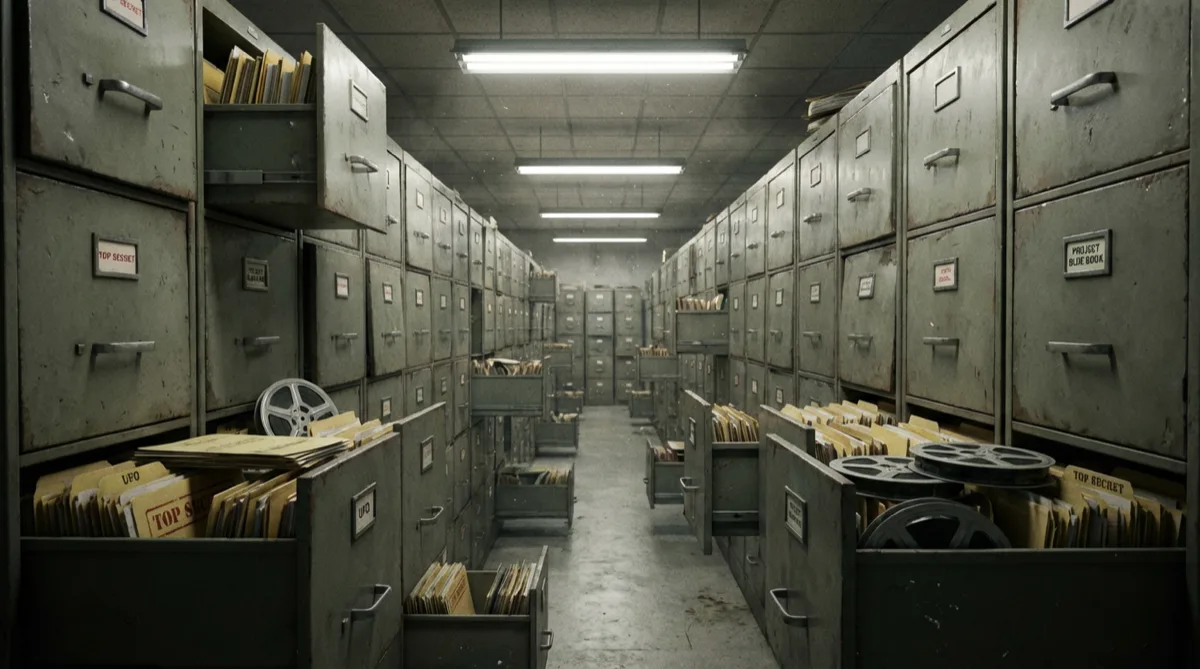
FBI Files Reveal Senior Official’s UAP Encounter and Reports of Small Beings
Among the most striking documents in the first PURSUE batch: the White House shared an FBI 302 interview with a senior U.S. intelligence official describing a first-hand UAP encounter at a military facility. A separate FBI memo describes a witness’s experience with beings “three and a half to 4 feet tall” wearing “space suits and helmets.” The Daily Mail also reported on another FBI file describing an informant who “feared for her life” after UFO sightings led to “mysterious deaths.”
NewsNation detailed additional standout material: a composite photo based on 2023 eyewitness reports of a 130–195-foot bronze metallic ellipsoid that “materialized out of a bright light” and “disappeared instantaneously.” A 2023 Greece clip shows a UAP making multiple 90-degree turns at roughly 80 mph over open water. Infrared stills from September and December 2025 show unidentified objects over the western United States – among the most recent cases in the release. And an INDOPACOM report describes a football-shaped body near Japan.
Sources: White House on FBI 302 · Daily Mail on four-foot beings · Daily Mail on informant · NewsNation details
Burlison Threatens Speech or Debate Clause Over Withheld UAP Videos
Rep. Eric Burlison warned the Trump administration that if certain UFO videos are not declassified, he will use the constitutional Speech or Debate Clause to release them himself. Burlison specifically wants footage of “UAPs flying around Russian submarines” – material he says Congress has seen but the public has not.
Burlison used the same constitutional protection in September 2025 to release Hellfire missile footage showing a U.S. MQ-9 Reaper drone firing at an unidentified object off Yemen’s coast – the object continued flying after being struck. His latest warning signals growing impatience with the pace of disclosure, even on the day the administration launched PURSUE.
Read the Burlison background →
Source: UAP James on X
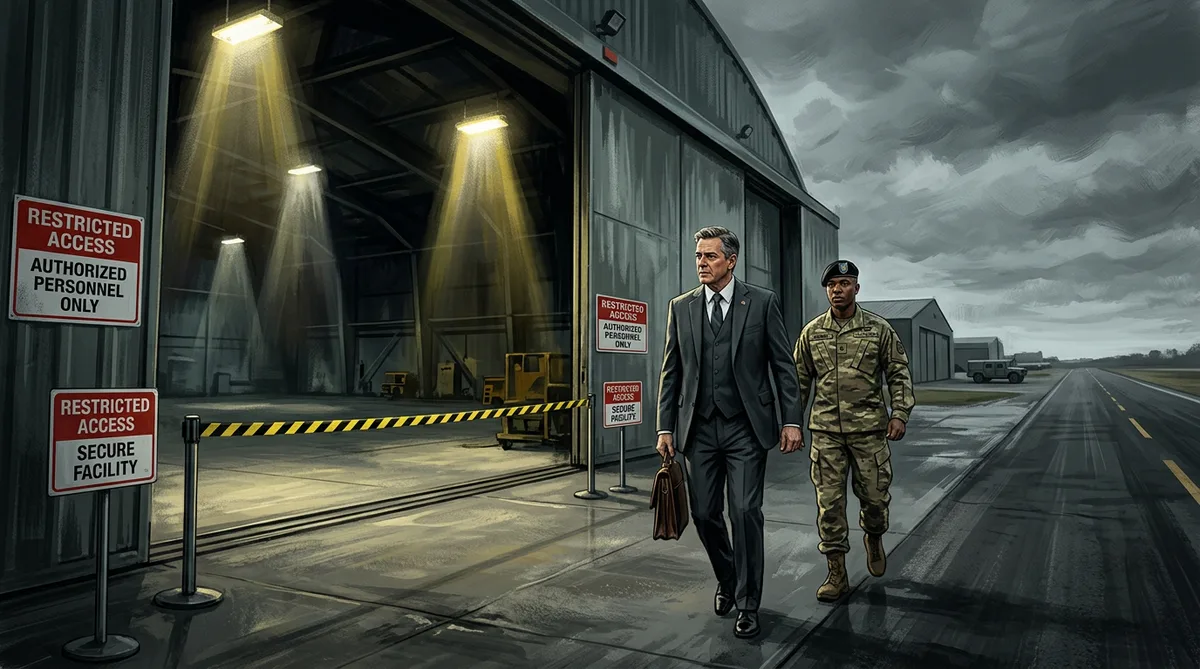
Boebert Points to Fallen Angels, Greene Calls Release “Propaganda”
Two contrasting GOP reactions on the same day. Rep. Lauren Boebert said the answers to the UFO files “may already be in the Old Testament,” pointing to fallen angels and the Nephilim. She described the phenomenon as “more spiritual, and if you really want to go there, demonic” – tracking with JD Vance’s earlier “demons” framing and the pastors who say they were briefed to prepare congregations.
Rep. Marjorie Taylor Greene went the other direction, calling the release “shiny object propaganda” and complaining that it distracts from the Epstein files and Iran. “I don’t care about the UFO files,” she posted.
The split shows the disclosure debate fragmenting even within the same party: some members are racing to interpret the files through faith, others dismissing them as noise.
Full congressional reactions article →
Sources: ShadowofEzra on Boebert · Daily Mail on Greene
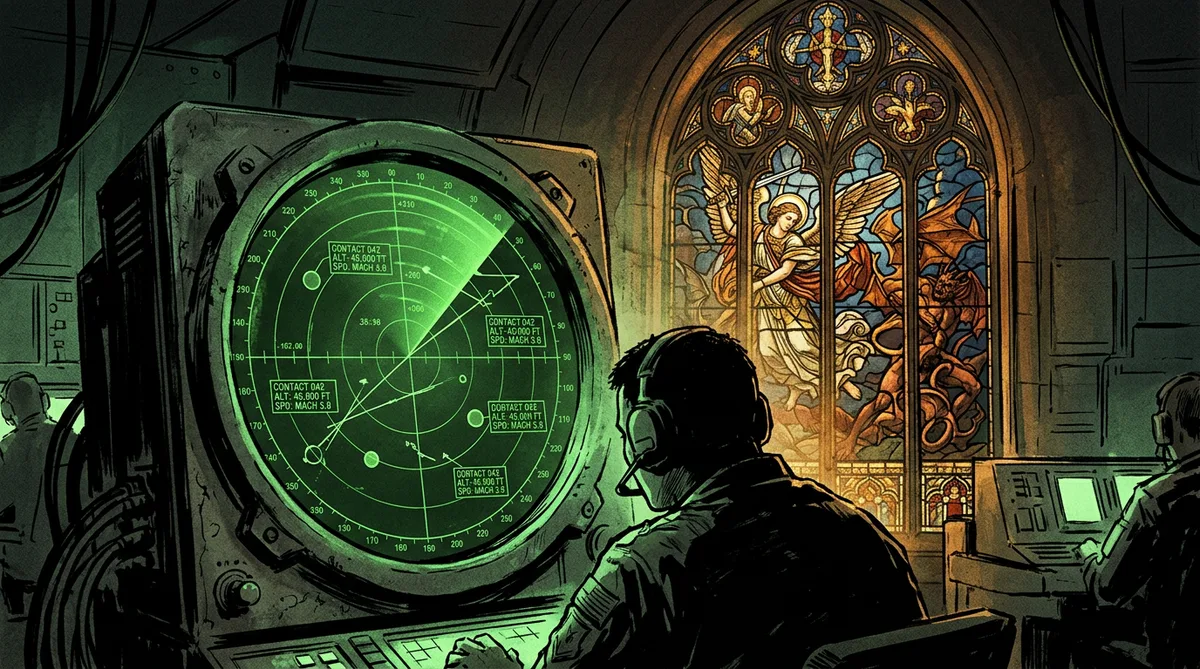
Elizondo: “A Paradigm Shift for Humanity”
Luis Elizondo, the former head of the Pentagon’s Advanced Aerospace Threat Identification Program, called the PURSUE launch “a historic day” and “a paradigm shift for humanity.” He thanked President Trump for “championing this historic initiative” and credited the bipartisan coalition of Congress members who pushed for transparency.
Source: Elizondo on X
Grusch Says CIA and DIA Are Blocking the President’s Team on UFO Files
Hours after PURSUE launched, David Grusch made a pointed claim: the CIA and DIA are actively blocking the President’s team from accessing UFO files.
“It has come to my attention as of today that there are some actors within certain intelligence agencies to include DIA and CIA that are blocking some of the President’s team in getting access,” Grusch said.
The timing is striking. On the same day the White House announced unprecedented transparency, the most prominent UAP whistleblower is saying intelligence agencies are still obstructing. If accurate, it means PURSUE’s rolling releases may be limited to what the agencies allow through – not what exists.
This tracks with Grusch’s earlier claims that legacy programs withheld data from his team at the National Geospatial-Intelligence Agency and from AARO, and that “decades and decades of information” and “recovered FME material” were never reported to Congress.
Full Grusch article → · PURSUE article →
Source: UAP James on X
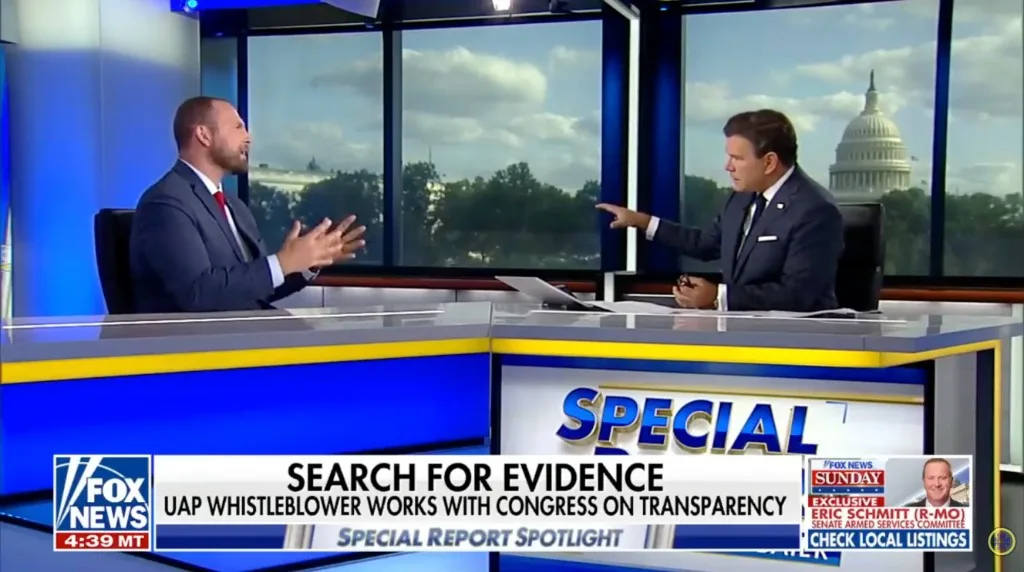
Sunday, May 10
46 UAP Videos Expected Next Week
NewsNation reports that the 46 classified UAP videos demanded by Rep. Anna Paulina Luna from the Department of War will be released next week. Luna confirmed that the files released Friday were only the beginning: “The UFO files that were released were classified – there’s more to come.”
Luna has said the requested docs and videos will be in the “second drop.” The 46 videos include spherical, cigar-shaped, and Tic Tac–like objects recorded by U.S. military platforms over war zones, oceans, and restricted airspace – with incidents near Iran, Syria, U.S. bases, Lake Huron, and INDOPACOM.
Rep. Tim Burchett has said the strongest material is still ahead: “The holy crap part is still coming.” If the 46 videos land next week, it will be the first time Congress has forced specific classified UAP footage into public view.
Luna 46 videos background → · PURSUE article →
Sources: YourAnonOne on X · InterstellarUAP on Luna · MarioNawfal on X
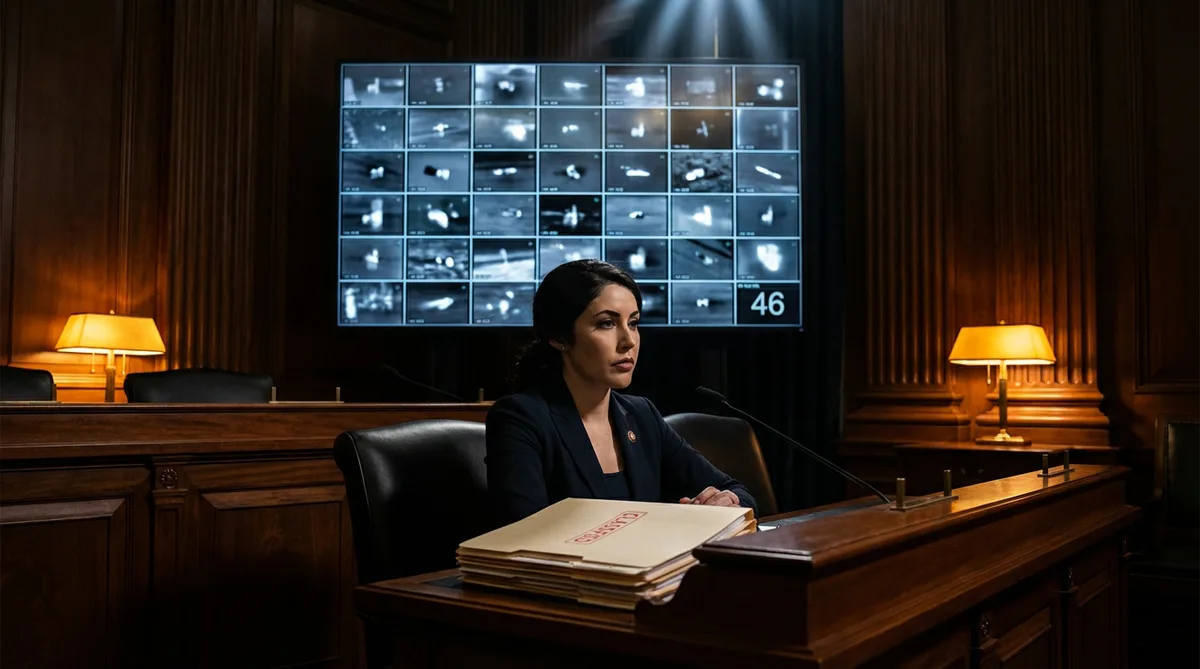
Liberation Times Names CIA’s Aaron Lukas as Key Figure Blocking Disclosure
Liberation Times published a detailed investigation naming Aaron Lukas, the Principal Deputy Director of National Intelligence and former CIA operative, as a central figure blocking the Trump administration from accessing stronger UFO material.
Multiple sources told journalist Chris Sharp that Lukas – who previously served as a CIA station chief and intelligence analyst – is working within ODNI in a way that protects CIA interests, including elements opposed to Trump’s transparency directive. Sources specifically pointed to the Weapons and Counterproliferation Mission Center and the Directorate of Science and Technology as CIA components historically involved in UAP retrieval and analysis.
Matthew Ford of The Good Trouble Show alleged that Lukas is “doing favors for senior CIA and Defense Intelligence Agency officers to block Trump officials, including his own boss DNI Tulsi Gabbard, from getting the UFO legacy program under control.” He added: “This is not slow-walking the file releases. This is the deep state in its purest form.”
The story directly corroborates David Grusch’s Friday claim that “actors within certain intelligence agencies to include DIA and CIA” are blocking the President’s team. It now has a name attached.
Sources also told Liberation Times that the first PURSUE release fell short of what real disclosure would require. Intelligence sources said future releases must include material from national systems – specifically NRO and CIA space-based electro-optical platforms – rather than the tactical military systems released so far. And they defined disclosure in stark terms: an acknowledgement that the U.S. has recovered vehicles and bodies of non-human origin, potentially including living beings, and that the government has entered into cooperative agreements with non-human entities.
Ross Coulthart called the allegations “gravely concerning.” Corbell endorsed Sharp’s piece as “accurate and powerful.”
Full Aaron Lukas article → · What “real disclosure” means → · Grusch on CIA/DIA blocking →
Sources: Liberation Times · Chris Sharp thread on X · Ross Coulthart on Lukas
Pentagon UFO Website Drew Nearly 500 Million Hits
The war.gov/UFO portal received nearly 500 million hits in its first 48 hours, according to a figure cited by Liberation Times. The New York Post separately reported 340 million hits in the first 12 hours alone.
The numbers show extraordinary public demand for the files. Whether the administration responds to that demand with stronger material – or continues releasing lower-classification tactical footage – may define the next phase of disclosure.
Source: New York Post
Rep. Subramanyam: “I’m Underwhelmed by the Release Given What I’ve Seen”
Rep. Subramanyam said he has seen classified material that goes beyond what was released Friday. “I’m underwhelmed by the release given the things that I’ve seen,” he said. “I’d like more to be released. The American people deserve to know what we have.”
The statement is notable because Subramanyam is not from the usual UAP caucus orbit. A bipartisan consensus is forming that the first tranche was a start, not a destination.
Source: UAP James on X

Buzz Aldrin’s Sister: “Something Followed Them”
Documentary filmmaker James Fox said on a podcast that he met with Fay Ann Aldrin, sister of Apollo 11 astronaut Buzz Aldrin. According to Fox, Fay Ann said Buzz told her that “something followed them” during the mission.
The claim adds personal family testimony to the Apollo-era material released through PURSUE, which already includes Apollo 12 and Apollo 17 imagery and the Gemini 7 “bogey” audio.
Source: Chris Sharp on X
Saturday, May 9
Eight of Luna’s 46 Videos Appear in Advance Document
The New York Post reports that eight of the 46 UAP videos sought by Congress appear in a newly surfaced document ahead of their official release. This suggests the Pentagon has been organizing the requested material and some may already be in the pipeline.
Source: New York Post
NewsNation: Coulthart Says First Release “Underwhelming” but White House Is Serious
Ross Coulthart told NewsNation that the initial PURSUE release was underwhelming but that the White House is serious about pushing more material out. He said the real “pot of gold” is hidden across other agencies beyond the Department of War.
Separately, NewsNation aired a Reality Check segment with Coulthart and religious scholar Timothy Alberino discussing reports of pastors being briefed on non-human intelligence and how religion views UAP – a story UFOUAP broke earlier this week.
Sources: NewsNation on Coulthart · Reality Check with Alberino
Thursday, May 7
Burchett Says First UFO File Batch Starts Friday, Luna Points to 8 A.M.
Jeremy Corbell says sources in the White House and Congress told him and George Knapp that the presidential UFO file release will begin tomorrow.
Corbell wrote that the release will be “slow and steady at first” and that nothing shocking is expected initially. Chris Sharp of Liberation Times called the start of the process significant, adding that the key question will be whether the administration’s public position diverges from AARO’s current line.
Rep. Anna Paulina Luna then posted, “Tomorrow will be good,” followed by “8am” and “EST.” In a reply asking whether the public would get the 46 videos she requested from the Pentagon, Luna wrote: “Our requested docs/vids will be in second drop.”
The timing lines up with new pressure from Rep. Tim Burchett, who said he had a UFO files release meeting with Department of War officials at 3 p.m. today. “If they’re gonna disclose it to us, it’ll be out as soon as they hang up the phone,” Burchett said, adding that he feels an obligation to share what he knows if the government does not.
After that meeting, Just the News reported that Burchett said the first batch will start Friday, include “some stuff” from pilots, and “maybe one video.” He said the releases will come in waves, roughly a week apart. The first batch is not expected to include the 46 UAP videos Luna requested from the Pentagon.
Read the Trump UFO files background →
Sources: Just the News · Daily Mail · Jeremy Corbell on X · Anna Paulina Luna: “Tomorrow will be good” · Luna: “8am” · Luna: “EST” · Luna on second drop · UAP James on Burchett meeting · Chris Sharp on X
Pastors Say They Were Briefed to Prepare Christians for UFO Disclosure
Perry Stone, Alan DiDio, and Tony Merkel say Christian leaders were privately warned to prepare congregations for UFO disclosure. Stone said pastors were told upcoming releases could involve non-human craft, unusual materials, and beings that would force churches to answer hard questions. DiDio says he was in a Tennessee Airbnb meeting where roughly half a dozen Christian leaders discussed alleged retrieval and reverse-engineering work tied to non-human intelligence.
The story matters because it points beyond theology. If government-connected people are quietly briefing religious leaders before the public sees the files, disclosure is already being shaped through churches, podcasts, and community trust networks.
Sources: Daily Mail · Perry Stone video · Joseph Z livestream · Newsmax
Wednesday, May 6
Grusch Says Legacy UAP Programs Withheld Data From NGA and AARO
David Grusch made a substantive new set of public statements during a Space Symposium panel posted by Jeremy Corbell, linking UAP disclosure to space-domain defense, legacy intelligence stovepipes, and a White House-led acknowledgement strategy.
Grusch said his last intelligence-community assignment dealt with “transmedium threats” and anomalous activity in the sky, space domain, and undersea. He argued that some threats now move across domains that legacy sensors and analytic systems still treat as separate problems.
The strongest claim came when Grusch described data control inside legacy programs. He said a lot of that data was not shared with his team at the National Geospatial-Intelligence Agency or with AARO, even though the government had “decades and decades of information” and “recovered FME material” that was not reported to Congress.
He also tied the issue to President Trump’s February disclosure promise, saying the future will require persistent sensing, rapid attribution, resilient networks, and machine-speed data. Asked what should happen next, Grusch said there should be a public acknowledgement strategy, with some of it coming from the White House, and that UAP should be integrated into the National Intelligence Priority Framework.
Marik von Rennenkampff’s Gimbal Analysis Hits Podcast Feed
The Good Trouble Show flagged that Marik von Rennenkampff’s Gimbal analysis is now available on its podcast feed, calling it “the 20-minute case that ends the Mick West era of UFO debunking.”
The Gimbal video remains one of the central public pieces of Navy UAP evidence because it combines cockpit audio, sensor footage, and pilot context from the broader USS Theodore Roosevelt encounter wave. The key dispute has always been whether the apparent rotation is a sensor/gimbal artifact, the object itself, or something more complex in the targeting system and flight geometry.
Rennenkampff’s analysis is worth tracking because he has consistently approached UAP evidence through government records, flight-safety implications, and official accountability rather than personality-driven debate. If the podcast version adds new specifics beyond prior public arguments, it may warrant a fuller update to the Roosevelt/Gimbal article.
Read the Gimbal/GoFast background →
Source: The Good Trouble Show on X